- Essential Pre-Flight Planning for Your Bhutan Helicopter Journey
- Selecting the Perfect Helicopter Tour Company
- Must-See Destinations and Flight Routes
- Physical Preparation and Health Considerations
- Packing Smart for Your Helicopter Adventure
- Maximising Your In-Flight Experience
- Budget Planning and Cost Management
- Conclusion
Bhutan helicopter tours offer an unmatched way to explore the Last Shangri-La from above, combining breathtaking Himalayan views with access to remote monasteries and pristine landscapes that ground travellers rarely reach.
This guide is for adventure seekers, luxury travellers, and photography enthusiasts who want to experience Bhutan's dramatic terrain through helicopter exploration. You'll discover how to choose the right tour operator that prioritises safety and local expertise, along with the most spectacular flight routes that showcase Tiger's Nest Monastery, ancient dzongs, and hidden valleys.
We'll also cover essential packing strategies for high-altitude helicopter flights and budget planning tips to help you maximise your investment in this once-in-a-lifetime Bhutan adventure.
Essential Pre-Flight Planning for Your Bhutan Helicopter Journey
Determine Your Optimal Travel Season and Weather Windows
Bhutan's mountainous terrain creates distinct seasonal patterns that directly impact helicopter flight conditions. The best flying weather typically occurs during two prime windows: October through November and March through May. During these months, you'll find clearer skies, minimal cloud cover, and stable atmospheric conditions that allow pilots to navigate safely through the Himalayan valleys.
Spring months offer exceptional visibility with blooming rhododendrons painting the landscapes in vibrant colours, while autumn provides crystal-clear mountain views with comfortable temperatures. Winter flights between December and February are possible but come with increased weather-related cancellations due to snowfall and cloud cover. Monsoon season from June through September presents the most challenging conditions, with heavy rainfall, thick cloud cover, and limited visibility making helicopter operations extremely difficult.
Mountain weather changes rapidly, so build flexibility into your itinerary. Even during optimal seasons, afternoon thunderstorms can develop quickly, which is why most helicopter tours operate during morning hours when conditions remain most stable.
Secure Required Permits and Documentation
Every helicopter passenger in Bhutan must obtain a tourist visa before arrival, which requires booking through a licensed tour operator. The visa process takes approximately 7-10 working days, so submit your application well ahead of your planned departure date. You'll need a clear passport photo, a passport copy valid for at least six months, and a completed visa application form.
Beyond standard tourist documentation, helicopter tours require special flight permits issued by Bhutan's Department of Civil Aviation. Your tour operator typically handles this paperwork, but confirm these permits are included in your package. Some restricted areas require additional clearances that can take several weeks to process.
Keep multiple copies of all documents stored separately in your luggage. Immigration officials at Paro Airport will verify your visa approval letter, so ensure you have both digital and physical copies readily accessible.
Choose Your Helicopter Tour Package and Duration
Helicopter tours in Bhutan range from short 30-minute scenic flights to multi-day adventures covering remote monasteries and mountain peaks. Popular options include Tiger's Nest monastery flyovers, Bumthang valley explorations, and high-altitude glacier tours near Jomolhari peak.
Consider your experience level and comfort with flying when selecting duration. First-time helicopter passengers might prefer shorter flights to gauge their comfort level, while experienced travellers can tackle full-day expeditions. Half-day tours typically cover 2-3 destinations, providing a good balance between adventure and manageable time commitments.
Package pricing varies significantly based on group size, flight duration, and included amenities. Shared flights cost less but offer limited customisation, while private charters provide complete itinerary control at premium rates. Most reputable operators offer packages that include ground transfers, permits, and meals during longer excursions.
Book Accommodations in Strategic Locations
Strategic accommodation placement can dramatically enhance your helicopter adventure experience. Thimphu and Paro serve as primary helicopter bases, making hotels in these locations ideal for tour departures. Book accommodations within 30 minutes of the helipad to minimise early morning travel stress.
For multi-day helicopter tours, consider staying in Bumthang or Punakha valleys, which provide access to remote landing sites and cultural experiences between flights. Many luxury lodges in these areas cater specifically to helicopter tour guests, offering specialized services like packed lunches and flexible check-in times.
Reserve rooms well in advance, especially during peak seasons when Bhutan's limited accommodation fills quickly. Some helicopter tour packages include lodging, but verify that the quality and location meet your preferences. Mountain weather can cause unexpected delays, so choose accommodations with flexible cancellation policies and ensure your bookings allow for potential schedule changes.
Selecting the Perfect Helicopter Tour Company
.png)
Research Licensed Operators with Safety Certifications
Start by checking if the company holds proper certifications from Bhutan's Department of Civil Aviation. Legitimate helicopter operators will proudly display their licenses and certifications on their websites or provide them upon request. Look for companies that maintain IATA memberships and follow international aviation safety standards.
Safety records matter more than flashy marketing materials. Ask potential operators about their accident history, maintenance schedules, and emergency protocols. Top-tier companies will have transparent safety policies and won't hesitate to share their safety statistics. They should also carry comprehensive insurance coverage that protects both passengers and equipment.
Check online reviews carefully, but don't rely solely on them. Contact the company directly to ask about their safety training programs for pilots and ground crew. Reputable operators invest heavily in ongoing safety education and regularly update their procedures based on industry best practices.
Compare Fleet Types and Aircraft Specifications
Different helicopters offer varying levels of comfort, capacity, and flight capabilities. Single-engine helicopters like the AS350 B3e work well for smaller groups and shorter flights, while twin-engine aircraft provide extra safety margins for longer journeys or challenging weather conditions.
Consider passenger capacity carefully. A helicopter that seats six might feel cramped with luggage, especially on multi-day tours. Window placement also affects your photography opportunities – some aircraft offer better panoramic views than others.
| Aircraft Type | Passenger Capacity | Best For | Key Features |
| AS350 B3e | 5 passengers | Day trips, scenic tours | High altitude performance, large windows |
| Bell 407 | 6 passengers | Group tours | Spacious cabin, smooth flight |
| EC130 | 7 passengers | Photography tours | 180-degree windows, quiet cabin |
Age and maintenance history of the fleet matter significantly. Ask about recent upgrades, engine overhaul schedules, and whether the aircraft has modern navigation systems. Well-maintained helicopters not only perform better but also provide smoother, more comfortable flights.
Evaluate Pilot Experience and Local Knowledge
Pilot experience in Bhutan's unique flying conditions makes a huge difference in your adventure quality. Mountain flying requires specialized skills that differ greatly from standard aviation training. Look for pilots with substantial high-altitude experience and specific training in Himalayan flying conditions.
Local knowledge goes beyond technical flying skills. Experienced Bhutanese pilots know the best times to visit certain locations, understand weather patterns, and can share fascinating cultural insights during your flight. They also know alternative routes when weather conditions change unexpectedly.
Ask about pilot certifications and flight hours logged in Bhutanese airspace. Many excellent pilots have 2,000+ hours of mountain flying experience and hold commercial helicopter licenses with instrument ratings. Some operators employ pilots who've worked in other Himalayan regions like Nepal or Kashmir, bringing valuable high-altitude expertise to your journey.
Communication skills matter too. Your pilot should speak clear English and feel comfortable answering questions about the landscape, culture, and history visible during your flight. The best pilots act as aerial tour guides, enriching your experience with stories and local knowledge you won't find in guidebooks.
Must-See Destinations and Flight Routes
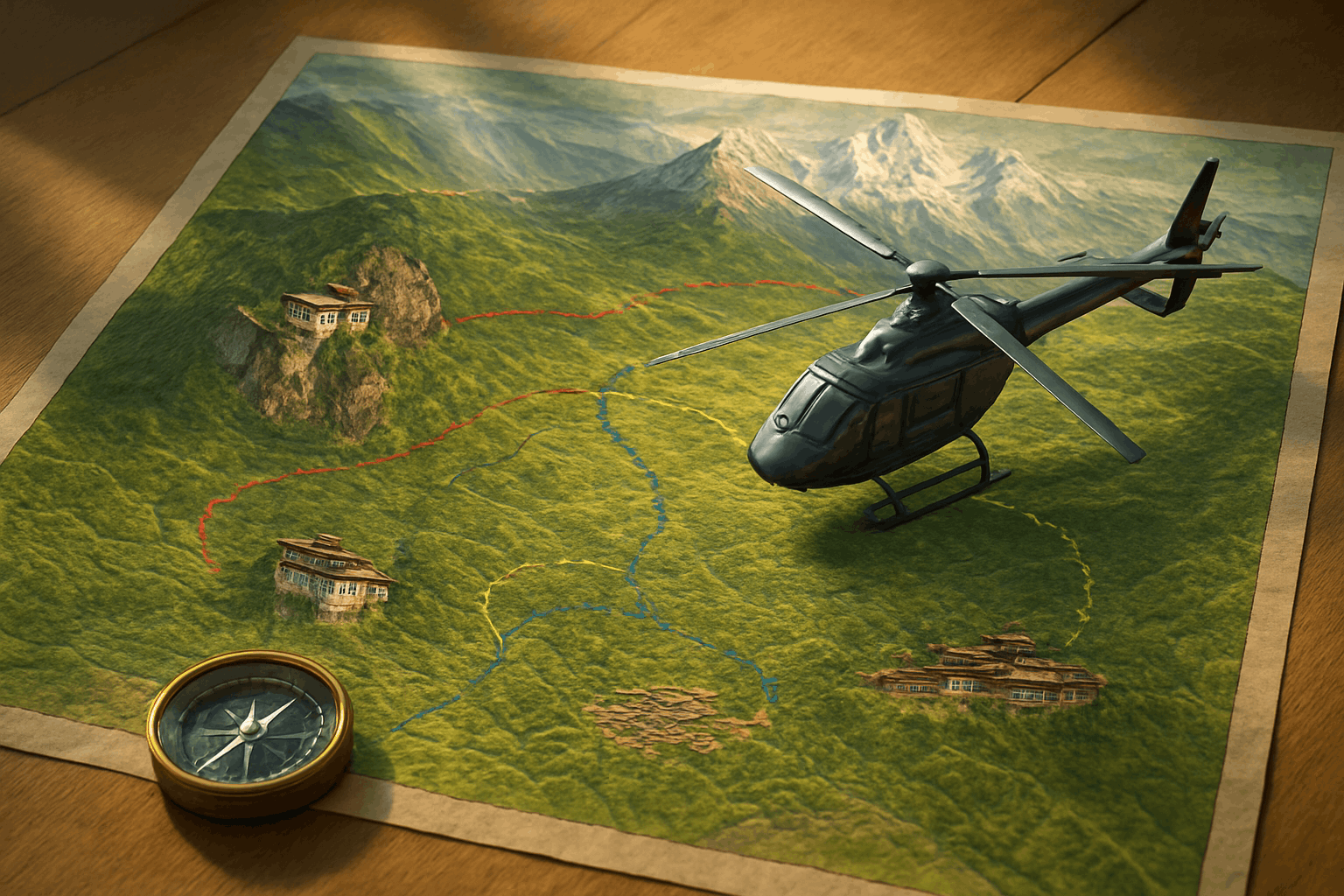
Tiger's Nest Monastery Aerial Experience
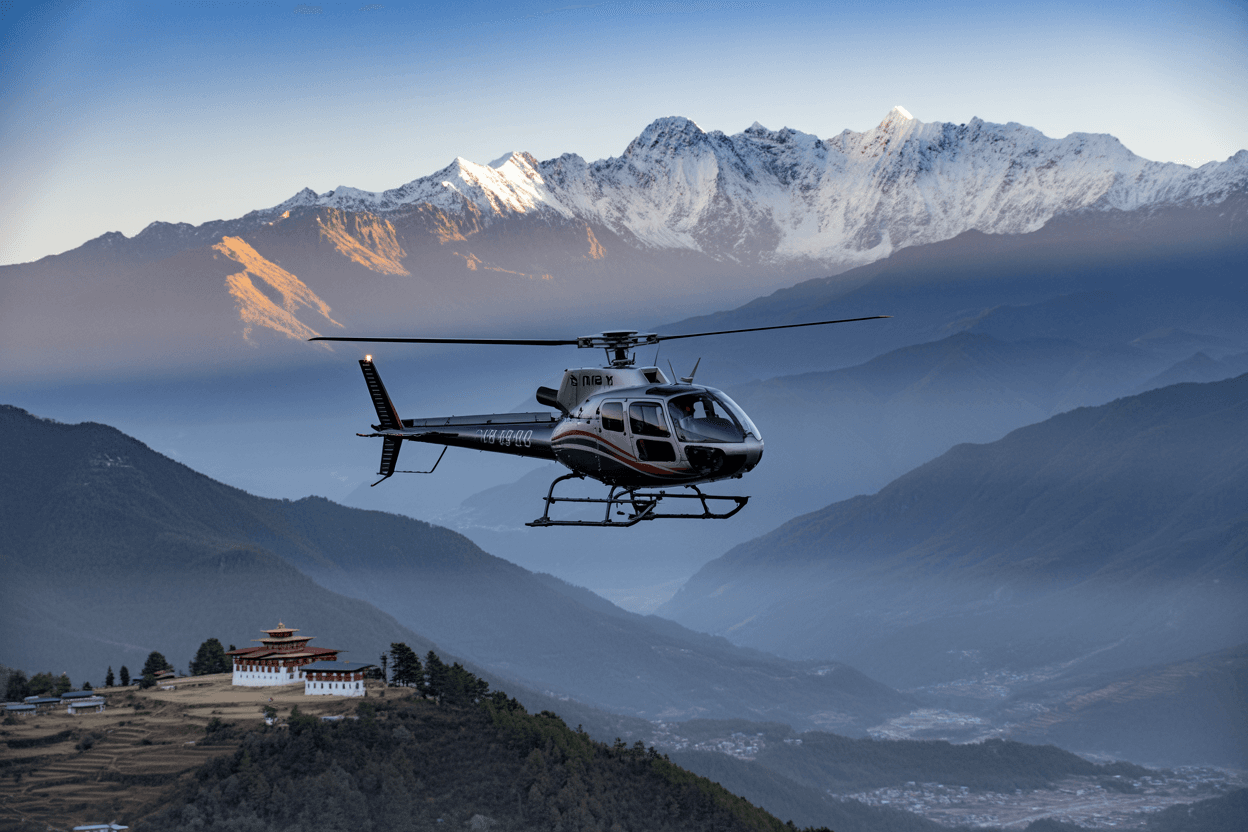
Flying over Paro Taktsang, better known as Tiger's Nest Monastery, ranks among the most breathtaking helicopter experiences in Bhutan. This iconic monastery clings dramatically to a cliff face 3,000 feet above the Paro Valley, and seeing it from above reveals perspectives impossible to capture from ground level. The aerial approach showcases the monastery's incredible engineering, with buildings that seem to merge seamlessly into the rock face.
The best flight times occur during morning hours when lighting conditions create stunning contrasts against the cliff walls. Pilots typically circle the monastery multiple times, allowing passengers to photograph from different angles. The surrounding pine forests and prayer flags add vibrant colours to your shots, while the sheer drop below emphasises the monastery's precarious yet magnificent position.
Many helicopter tours combine the Tiger's Nest overflight with a landing at a nearby viewpoint, giving you time to absorb the spiritual significance of this sacred site. The monastery's history dates back to 1692, built around the cave where Guru Rinpoche meditated for three years, three months, three weeks, and three days.
Himalayan Peak Viewing Routes
Bhutan's helicopter tours offer unparalleled access to some of the world's most spectacular mountain scenery. The northern routes provide clear views of peaks exceeding 20,000 feet, including Jomolhari, Bhutan's second-highest mountain at 24,035 feet. These flights typically follow valleys that cut deep into the Himalayan range, offering intimate perspectives of glaciers, ice falls, and remote high-altitude landscapes.
Weather conditions play a critical role in mountain viewing flights. Clear mornings between October and December, and March through May, provide the best visibility. Cloud formations can develop rapidly in the afternoon, making early morning departures essential for optimal viewing conditions.
The most popular routes include:
- Jomolhari Base Camp Circuit: Views of Jomolhari and surrounding peaks
- Laya-Gasa Route: Remote mountain landscapes and glacier viewing
- Lunana Circuit: Access to some of Bhutan's most isolated peaks
- Table Mountain Approach: Panoramic views of the entire Himalayan range
Pilots familiar with these routes know exactly where to position the helicopter for the best photographic opportunities, often hovering at strategic viewpoints to allow passengers time to capture the majesty of these towering peaks.
Remote Dzong and Fortress Overflights
Bhutan's dzongs represent some of the finest examples of traditional architecture in the Himalayas, and aerial perspectives reveal their strategic positioning and architectural brilliance. These fortress-monasteries, built without nails or architectural plans, demonstrate incredible craftsmanship that becomes even more impressive when viewed from above.
Punakha Dzong, positioned at the confluence of two rivers, creates one of the most photographed aerial scenes in Bhutan. The dzong's massive walls and intricate courtyards appear like a mandala when viewed from helicopter height. The surrounding landscape shows how these structures were positioned to control river valleys and trade routes.
Trongsa Dzong, the largest dzong complex in Bhutan, sprawls across a ridge overlooking the Mangde River valley. From the air, you can appreciate how this massive structure once controlled east-west travel through central Bhutan. The helicopter approach reveals hidden courtyards and architectural details invisible from ground level.
Other notable dzong overflights include:
- Wangdue Phodrang Dzong: Commanding valley views despite recent reconstruction
- Jakar Dzong: Known as the "Castle of the White Bird"
- Simtokha Dzong: Bhutan's oldest dzong with strategic valley positioning
- Paro Rinpung Dzong: Famous for its impressive walls and festival courtyards
Hidden Valley and Lake Discoveries
Helicopter access opens up remote valleys and pristine alpine lakes that remain largely untouched by modern development. These hidden gems showcase Bhutan's incredible biodiversity and untamed natural beauty. High-altitude lakes like Thanza and the lakes of the Lunana region remain frozen for much of the year, creating mirror-like surfaces that reflect surrounding peaks.
The Bumthang valleys, known as the "Switzerland of Bhutan," reveal intricate patterns of terraced fields, traditional farmhouses, and ancient temples when viewed from above. The helicopter perspective shows how communities have adapted to mountain agriculture over centuries, creating sustainable farming systems in challenging terrain.
Remote valleys like Laya and Lunana become accessible through helicopter tours, areas that would otherwise require weeks of trekking to reach. These flights reveal traditional yak herding communities, pristine forests, and wildlife habitats that have remained unchanged for generations.
Seasonal timing affects lake and valley viewing significantly. Spring flights reveal blooming rhododendrons painting entire hillsides in brilliant colours, while autumn offers crystal-clear visibility and golden vegetation. Monsoon season limits access to many remote areas due to cloud cover and weather patterns.
Traditional Village Aerial Tours
Bhutan's traditional villages maintain architectural styles and lifestyles that have remained largely unchanged for centuries. Helicopter tours provide unique perspectives on village layouts, traditional farmhouses, and community organisation that ground-level visits cannot match.
Villages in the Bumthang region showcase traditional architecture with distinctive white-washed walls and red timber details. From above, you can see how villages organise around central temples and community spaces, with fields arranged in intricate patterns around settlements. The integration of sacred and secular spaces becomes apparent when viewed from a helicopter height.
Remote villages like those in the Haa Valley or upper reaches of the Phobjikha Valley reveal how communities have adapted to high-altitude living. Traditional houses with thick stone walls and distinctive sloped roofs demonstrate centuries of architectural evolution adapted to harsh mountain climates.
Village helicopter tours often include:
- Ura Village: Traditional cobblestone streets and ancient houses
- Tang Valley Communities: Remote settlements with traditional lifestyles
- Sopsokha Village: Famous for its traditional paper-making
- Ogyen Choling: Historic manor house and surrounding village
- Thangbi Village: Known for traditional weaving and handicrafts
These aerial perspectives show how traditional Bhutanese communities have maintained harmony with their natural environment, creating sustainable settlements that work with rather than against the mountain landscape. The tours provide insights into traditional agriculture, architecture, and community organization that have sustained these mountain populations for generations.
Physical Preparation and Health Considerations
.jpeg)
Altitude Acclimatisation Strategies
Flying at high altitudes above Bhutan's mountainous terrain exposes you to reduced oxygen levels that can affect your body differently than ground-level trekking. Your helicopter will reach elevations between 12,000 and 15,000 feet, sometimes higher when viewing peaks like Everest or Kanchenjunga.
Start preparing your body at least two weeks before departure. If you live at sea level, consider spending a few days at a moderate altitude (5,000-8,000 feet) before travelling to Bhutan. Many travellers find success visiting destinations like Denver, Salt Lake City, or mountain resorts as stepping stones.
Hydration plays a crucial role in altitude adaptation. Begin increasing your water intake several days before departure and maintain it throughout your trip. Avoid alcohol and limit caffeine, as both can worsen altitude effects and dehydration.
Sleep quality often suffers at altitude, so pack melatonin or consult your doctor about sleep aids. Your body needs quality rest to adapt properly. Consider arriving in Bhutan 2-3 days before your helicopter tour to adjust to the baseline elevation of Thimphu (7,600 feet) and Paro (7,300 feet).
Watch for altitude sickness symptoms during your flight: headaches, nausea, dizziness, or fatigue. Modern helicopters have oxygen systems, but inform your pilot immediately if you experience severe symptoms. Most helicopter tours can descend quickly if needed, making this a safer option than ground-based high-altitude activities.
Medical Clearance Requirements
Most helicopter operators in Bhutan require medical clearance forms, especially for passengers over 65 or those with pre-existing conditions. Schedule a check-up with your physician 4-6 weeks before departure to allow time for any necessary tests or treatments.
Your doctor should evaluate your cardiovascular health, respiratory function, and blood pressure. High altitude, combined with the excitement and potential motion of helicopter flight, can strain these systems. Be honest about any heart conditions, lung problems, recent surgeries, or chronic illnesses.
Specific conditions that require extra attention include:
- Heart disease or high blood pressure: May worsen at altitude
- Respiratory conditions: Asthma, COPD, or sleep apnea can be problematic
- Recent surgeries: Especially abdominal or chest procedures
- Pregnancy: Most operators restrict flights after the first trimester
- Inner ear problems: Can worsen motion sickness and balance issues
Bring copies of your medical clearance and any relevant medical records. Some operators may request specific forms completed by your physician. Travel insurance that covers helicopter evacuation is essential, as medical evacuation from remote Bhutanese locations can cost $50,000-$100,000.
If you take medications, bring extra supplies in carry-on luggage. High altitude can affect how your body processes certain drugs, so discuss dosage adjustments with your doctor.
Fitness Level Assessment for High-Altitude Flying
While helicopter tours don't require hiking fitness, your body still needs to handle altitude stress and potential emergencies. Assess your current fitness level honestly and work on improvements where needed.
Cardiovascular endurance matters most. Your heart works harder at altitude to pump oxygen-depleted blood. Start a walking or light cardio routine 6-8 weeks before your trip. Aim for 30-45 minutes of moderate exercise daily. Swimming provides excellent cardiovascular conditioning while being easy on joints.
Core strength helps with motion stability during flight. Helicopter rides can involve sudden movements, especially in mountain winds. Basic core exercises like planks, bridges, and gentle twists prepare your body for these motions.
Fitness benchmarks to target:
- Walk 2-3 miles without significant breathlessness
- Climb 3-4 flights of stairs comfortably
- Maintain conversation during moderate exercise
- Balance on one foot for 30 seconds with eyes closed
Age considerations vary by individual rather than specific numbers. Many 70+ year-olds complete helicopter tours successfully, while some younger people struggle with altitude. Focus on your personal health status rather than age alone.
Motion sickness preparation deserves special attention. If you're prone to car sickness or seasickness, a helicopter flight might trigger similar responses. Practice balance exercises, consider motion sickness medications, and discuss preventive strategies with your doctor. Ginger supplements, acupressure wristbands, and prescription patches can all help manage symptoms during your flight.
Packing Smart for Your Helicopter Adventure
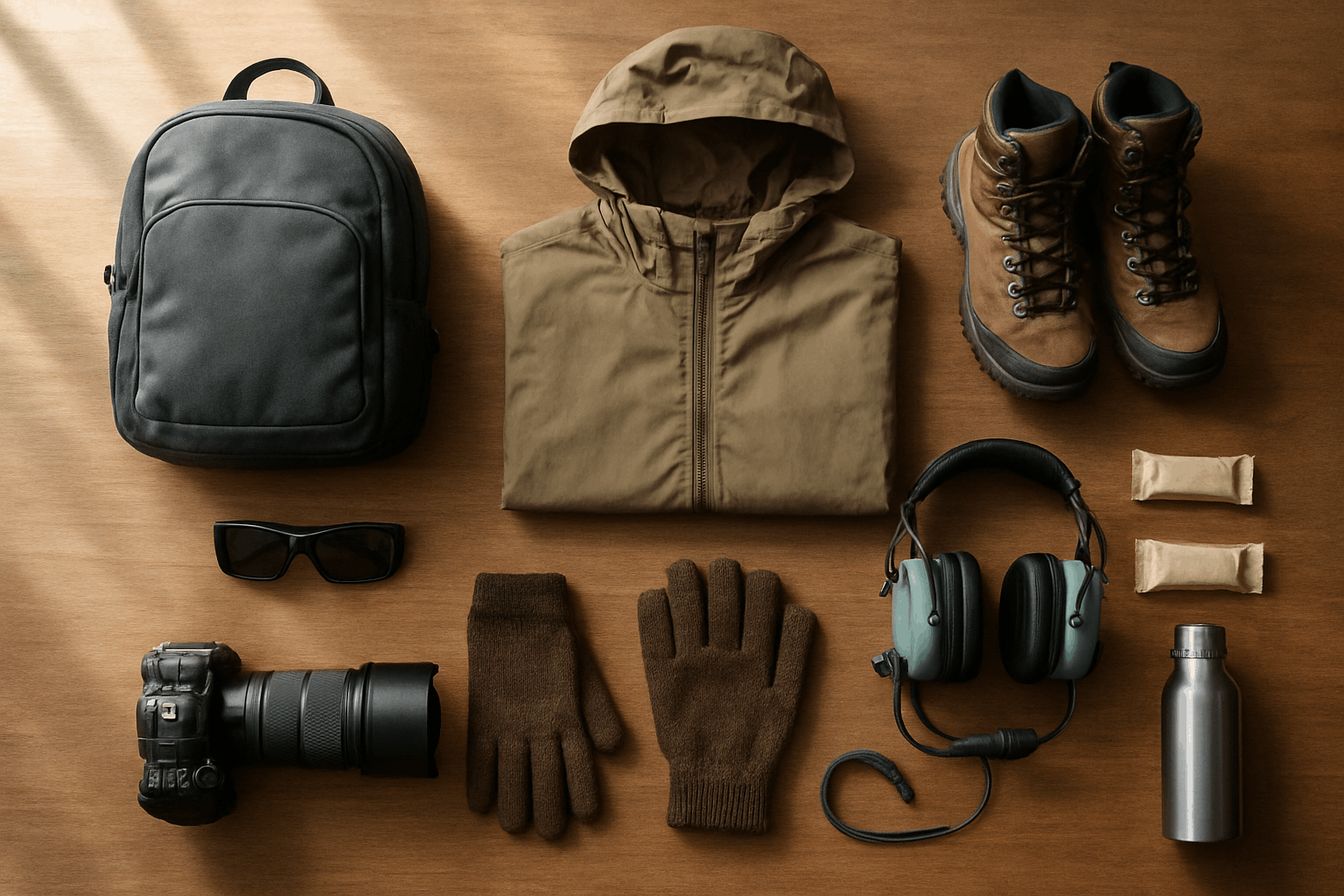
Essential Safety Gear and Equipment
Your helicopter adventure in Bhutan demands proper safety equipment that could make the difference between an amazing experience and a dangerous situation. Start with a quality helmet - many operators provide these, but bringing your own ensures the perfect fit and comfort for extended flights. Communication headsets are typically supplied by tour companies, yet if you're sensitive to noise or have specific hearing requirements, consider investing in noise-cancelling aviation headphones.
Pack a personal emergency kit containing basic first aid supplies, altitude sickness medication, and any prescription drugs you require. Include emergency contact information written on waterproof paper and stored in multiple locations. A reliable GPS device or smartphone with offline maps serves as backup navigation, though your pilot handles primary navigation duties.
Safety equipment also means personal protective items like sturdy sunglasses with UV protection and a reliable watch. The intense mountain sunlight at high altitudes can be overwhelming, and timing becomes critical during weather-dependent flight schedules. Consider bringing a small flashlight or headlamp - mountain weather changes rapidly, and early morning or late afternoon flights might encounter unexpected low-light conditions.
Weather-Appropriate Clothing Layers
Bhutan's mountain climate demands strategic layering that adapts to dramatic temperature changes during helicopter flights. Base layers should consist of moisture-wicking synthetic materials or merino wool - cotton becomes dangerous when wet and cold. Choose lightweight, breathable fabrics that maintain warmth even if they get damp from condensation or unexpected weather.
Your middle layer needs insulation properties. Down jackets work excellently but lose effectiveness when wet, so synthetic insulation offers more reliability in Bhutan's sometimes unpredictable conditions. Pack a fleece or synthetic puffy jacket that compresses well but provides substantial warmth at altitude.
The outer layer requires wind and water resistance. A quality rain jacket with good breathability protects against both precipitation and the significant wind chill experienced during helicopter flights. Choose jackets with pit zips for temperature regulation and secure pockets for essential items.
Don't forget extremities - fingers, toes, and head lose heat rapidly at altitude. Pack insulated gloves that still allow finger dexterity for camera operation, warm socks (avoid cotton), and a warm hat that fits comfortably under a helmet. Consider bringing backup gloves and socks, as cold, numb fingers can ruin photography opportunities and create safety concerns.
Photography Equipment for Aerial Shots
Aerial photography from helicopters requires specific equipment considerations that differ from ground-based shooting. Start with camera stability - handheld shooting from a moving helicopter produces disappointing results. While full gimbals might exceed weight restrictions, a quality camera strap and proper shooting technique make significant differences.
Fast shutter speeds become essential to combat helicopter vibration and movement. Set your camera to shutter priority mode with speeds of at least 1/500th second, preferably faster. This requires good low-light performance from your camera and lenses, so consider bringing equipment with excellent high-ISO capabilities.
Lens selection impacts your aerial photography success dramatically. Wide-angle lenses capture expansive mountain vistas and provide some vibration forgiveness, but don't neglect telephoto options for isolating distant peaks and monasteries. A 24-70mm equivalent zoom lens offers versatility without requiring frequent lens changes in cramped helicopter cabins.
Protect your equipment from altitude, temperature changes, and potential moisture. Silica gel packets help prevent condensation issues when moving between different altitudes and temperatures. Extra batteries become essential as cold weather drains power quickly, and charging opportunities might be limited during multi-day adventures.
Consider bringing lens cloths, memory card backups, and a simple cleaning kit. Dust and moisture can appear quickly in mountain environments, and you don't want equipment issues ruining once-in-a-lifetime shots of Tiger's Nest Monastery or Himalayan peaks.
Weight Restrictions and Baggage Guidelines
Helicopter operators enforce strict weight limits that include passengers, luggage, and fuel requirements for safe mountain flying. Most Bhutan helicopter tours allow 15-20 pounds of personal baggage per passenger, though this varies by aircraft type and tour duration. Exceed these limits, and you might face additional fees or be asked to leave items behind.
Distribute weight strategically between carry-on items and checked baggage. Essential items like medications, camera equipment, and weather layers should stay with you, while extra clothing and non-critical items can go in checked luggage. Soft-sided bags work better than hard cases in helicopter storage compartments.
Coordinate with your tour operator weeks before departure to understand specific restrictions. Some companies allow slightly higher weight limits for photography equipment when arranged in advance, while others maintain strict limits regardless of content. Ask about shared weight allowances if travelling with companions who pack lighter.
| Item Category | Recommended Weight | Priority Level |
| Camera Equipment | 5-7 lbs | High |
| Weather Clothing | 4-6 lbs | High |
| Personal Items | 2-3 lbs | Medium |
| Extra Gear | 3-4 lbs | Low |
Pack efficiently by choosing multi-purpose items and avoiding duplicates. A quality rain jacket eliminates the need for separate wind and water protection. Lightweight merino wool serves as both a base layer and casual wear. Every ounce counts when you're trying to maximise your helicopter adventure experience while staying within weight restrictions that ensure safe mountain flying operations.
Maximising Your In-Flight Experience
.png)
Optimal Seating Positions for Photography
The front passenger seat offers the best photography opportunities during your Bhutan helicopter adventure. This coveted spot provides unobstructed views through the large windscreen and side windows, perfect for capturing wide-angle shots of the Himalayan landscape. Ask your pilot about bubble windows if available – these curved glass sections eliminate window frames from your shots entirely.
Window seats on either side work well for specific destinations. The left side typically offers better views of Tiger's Nest Monastery during approach, while the right side provides stunning perspectives of Paro Valley. Research your flight path beforehand and request your preferred side based on planned photo opportunities.
Camera Settings for Aerial Photography:
- Shoot in RAW format for maximum editing flexibility
- Use fast shutter speeds (1/500s or faster) to eliminate vibration blur
- Keep ISO between 100 and 400 to maintain image quality
- Shoot in burst mode to capture multiple angles quickly
Avoid pressing your camera directly against the window, as helicopter vibrations will blur your images. Instead, hold your camera steady with both hands, maintaining a small gap from the glass. Polarizing filters help reduce glare and enhance contrast, especially useful when photographing snow-capped peaks and valleys below.
Communication with Your Pilot Guide
Your pilot doubles as your aerial tour guide, sharing insights about landmarks, history, and local culture throughout the flight. Most experienced helicopter pilots in Bhutan speak excellent English and possess extensive knowledge about the regions you'll explore. They can identify monasteries, villages, and geographical features that you might otherwise miss.
Effective Communication Tips:
- Use the provided headset system to ask questions clearly
- Point to specific landmarks you'd like to photograph
- Request brief hovering moments for better photo opportunities
- Ask about optimal timing for shots during different lighting conditions
Pilots appreciate passengers who show genuine interest in the landscape and culture. They often share stories about remote villages, explain seasonal changes in the terrain, and point out wildlife spotting opportunities. Don't hesitate to ask for explanations about what you're seeing – their local expertise adds tremendous value to your experience.
Establish hand signals before takeoff as backup communication. A thumbs up can signal you're ready for the next waypoint, while pointing gestures help direct attention to photography subjects. This proves especially helpful during louder flight segments when voice communication becomes challenging.
Safety Protocols and Emergency Procedures
Safety briefings happen before every flight and deserve your complete attention. Your pilot will demonstrate proper headset use, explain door operation, and show emergency equipment locations. Pay special attention to safety harness adjustment – it should feel snug but comfortable throughout the flight.
Essential Safety Equipment Locations:
- Life vests (stored under or behind seats)
- Emergency exits and door handles
- Fire extinguisher placement
- First aid kit location
- Emergency radio beacon
Weather changes rapidly in mountainous terrain, and pilots make real-time safety decisions based on visibility and wind conditions. Trust your pilot's judgment completely – they prioritise passenger safety over sightseeing schedules. Flight routes may change or flights may be postponed due to weather, and this decision-making process protects everyone aboard.
Emergency landing procedures vary by helicopter type, but basic principles remain consistent. Keep your seatbelt fastened throughout the flight, avoid touching controls or switches, and follow pilot instructions immediately during any emergency situation. Your pilot undergoes regular safety training and mountain flying certification specific to Bhutan's challenging terrain.
Motion sickness affects some passengers, especially during turbulence over mountain passes. Inform your pilot immediately if you feel unwell – they can adjust flight altitude or route to minimise discomfort. Carry motion sickness medication if you're prone to airsickness, and avoid heavy meals before flying.
Budget Planning and Cost Management

Helicopter Tour Pricing Breakdown
Helicopter tours in Bhutan operate on a tiered pricing structure that varies dramatically based on duration, destinations, and group size. Standard scenic flights around Thimphu and Paro typically range from $400 to $800 per person for 30-45 minute excursions. Premium mountain flights to iconic peaks like Tiger's Nest Monastery or Everest views command $1,200 to $2,500 per person for 1-3 hour experiences.
Private charter flights offer the most flexibility but carry a premium pricing of $2,500 to $5,000 per hour, regardless of passenger count. Shared group tours provide better value, especially for 4-6 passengers, where per-person costs drop significantly. Seasonal pricing fluctuations occur during peak tourist months (March-May and September-November), with rates increasing by 20-40%.
Most tour operators structure pricing around helicopter type and capacity:
| Helicopter Model | Passenger Capacity | Hourly Rate Range |
| AS350 B3e | 5 passengers | $2,800-$3,500 |
| Bell 206 | 4 passengers | $2,200-$2,800 |
| Robinson R44 | 3 passengers | $1,800-$2,400 |
Additional Expenses and Hidden Costs
Beyond base tour pricing, several additional expenses can significantly impact your budget. Airport transfer fees typically add $50-$150 per person, depending on your hotel location and transfer method. Photography and videography services, while optional, cost an additional $200-$500 for professional footage of your flight.
Fuel surcharges represent a common surprise expense, particularly during volatile fuel price periods. These surcharges range from 8-15% of your base tour cost and may not be clearly disclosed in initial quotes. Weather-related delays or cancellations can trigger accommodation and meal expenses if you're staying specifically for the helicopter tour.
Travel insurance with helicopter coverage adds another $80-$200 to your trip cost but proves essential for protecting against cancellation fees. Some operators require mandatory helicopter-specific insurance, which isn't always included in standard travel policies. Gratuities for pilots and ground crew typically range from 10-15% of your tour cost, though this varies by cultural norms and service quality.
Government taxes and permit fees can add unexpected costs, particularly for flights near restricted border areas or special conservation zones.
Money-Saving Tips and Package Deals
Group bookings unlock substantial savings, with operators often providing 15-25% discounts for parties of 4 or more passengers. Booking during shoulder seasons (December-February and June-August) can reduce costs by up to 30%, though weather conditions may be less favourable.
Multi-day packages combining helicopter tours with ground transportation and accommodation offer better overall value than individual bookings. These comprehensive packages typically include airport transfers, reducing your need to arrange separate transportation services.
Early booking discounts reward advance planning, with savings of 10-20% available for reservations made 60-90 days ahead. Last-minute deals occasionally surface for unsold inventory, though availability remains unpredictable and weather-dependent.
Consider shorter duration flights during your first helicopter experience in Bhutan. Many travellers find 30-45 minute scenic flights provide adequate mountain views and cultural immersion without the premium pricing of extended excursions. You can always book additional flights if your initial experience exceeds expectations.
Negotiate package deals that bundle helicopter tours with other activities like monastery visits, cultural performances, or trekking expeditions. Local tour operators often provide better pricing flexibility than international booking platforms, particularly for custom itineraries spanning multiple days.
Conclusion
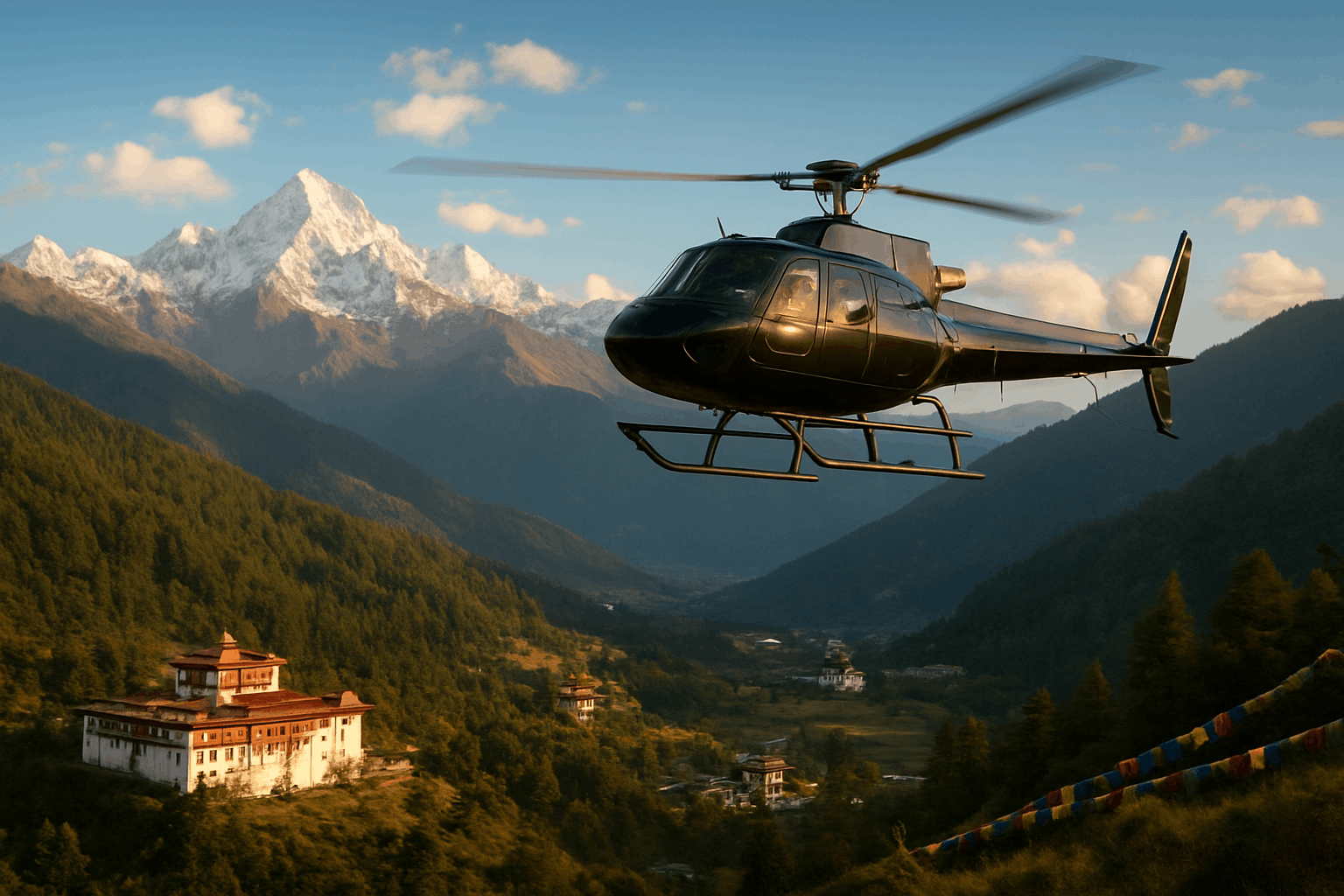
Planning a helicopter adventure in Bhutan requires careful attention to every detail, from choosing the right tour operator to preparing your body for high-altitude flying. The success of your journey depends on smart packing, understanding the costs involved, and knowing which destinations will give you the most breathtaking views of the Himalayas. Physical preparation and health considerations can't be overlooked when you're soaring above some of the world's highest peaks.
Your Bhutan helicopter experience will be one of those once-in-a-lifetime adventures that stays with you forever. Take the time to research tour companies thoroughly, pack light but smart, and prepare yourself physically for the altitude changes. Start planning your trip at least three months ahead to secure the best operators and routes. The investment in proper preparation will pay off when you're floating above ancient monasteries and snow-capped mountains, capturing memories that no ground-based tour could ever provide.