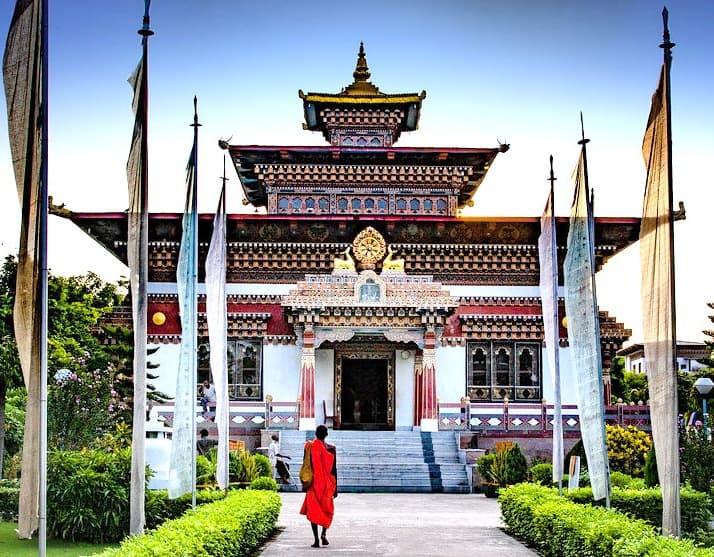
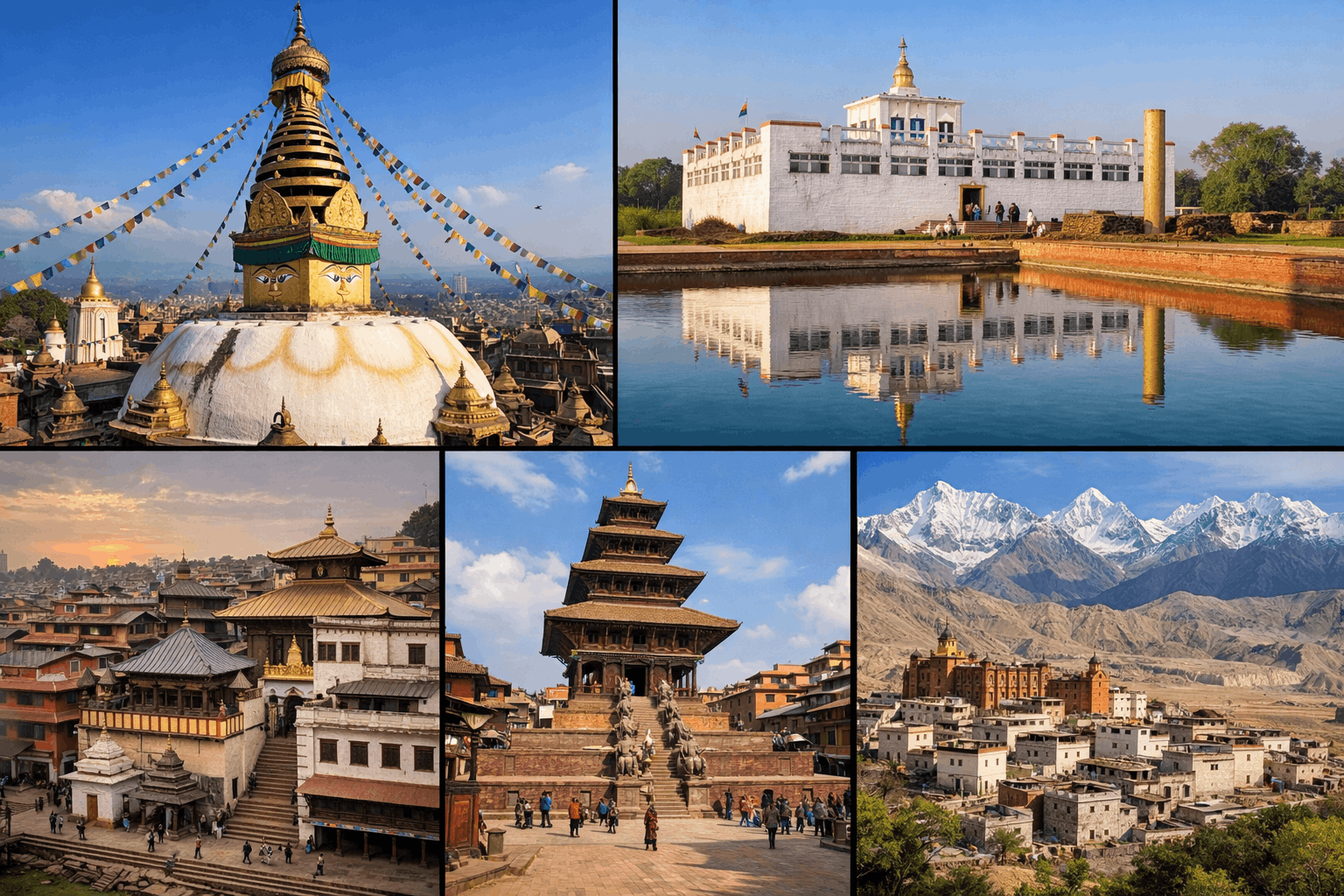
- Kathmandu Durbar Square - Discover Ancient Royal Palace Architecture
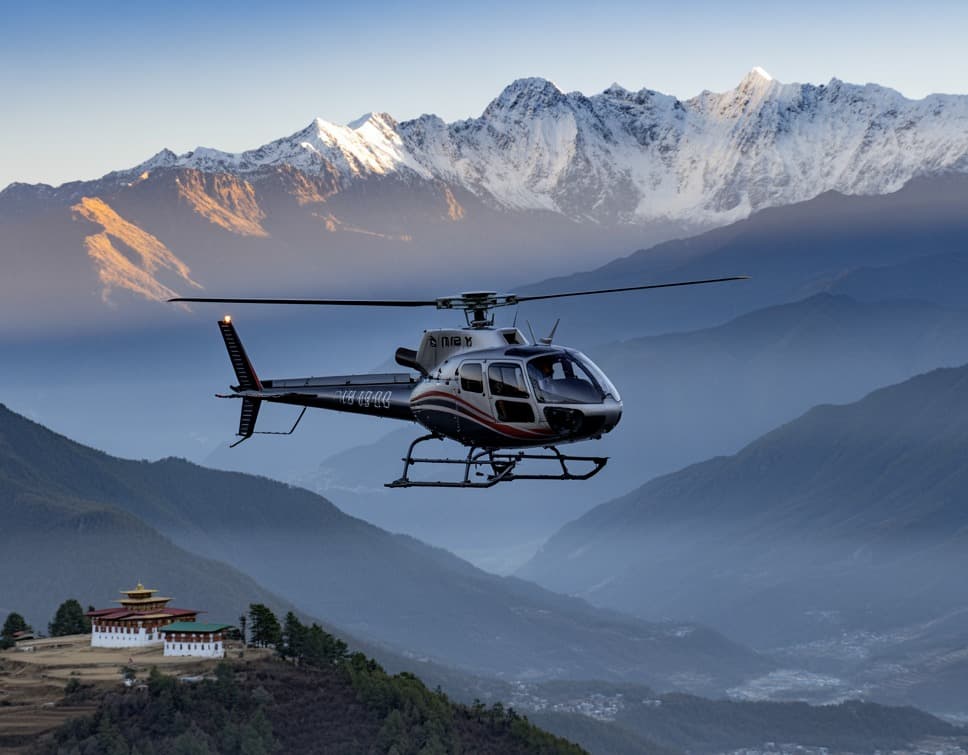
- Sagarmatha National Park - Journey to the World's Highest Peak
- Chitwan National Park - Safari Adventures in Nepal's Wildlife Haven
- Lumbini - Walk in Buddha's Birthplace and Find Inner Peace
- Bhaktapur Durbar Square - Step Back in Time to Medieval Nepal
- Conclusion
Nepal's four UNESCO World Heritage Sites offer travelers an incredible mix of ancient palaces, sacred birthplaces, and pristine wilderness. This guide is perfect for culture enthusiasts, adventure seekers, and spiritual travelers who want to experience Nepal's most treasured destinations.
You'll discover the royal architecture and living history of Kathmandu and Bhaktapur's durbar squares, where centuries-old temples and palaces tell stories of Nepal's rich past. We'll also explore how Sagarmatha National Park puts you at the doorstep of Mount Everest, while Chitwan National Park delivers unforgettable wildlife encounters with rhinos and tigers. Finally, you'll learn why Lumbini holds special meaning as Buddha's birthplace and remains a powerful destination for spiritual reflection.
Kathmandu Durbar Square - Discover Ancient Royal Palace Architecture
.png)
Marvel at the 50+ temples and monuments in one historic complex
Walking into Kathmandu Durbar Square feels like stepping through a portal into Nepal's royal past. This incredible complex houses over fifty temples, palaces, and monuments packed into a relatively compact area, creating one of the world's most concentrated displays of ancient architecture. Each structure tells a different story, from the towering nine-story Basantapur Tower to the intricate stone sculptures that guard temple entrances.
The square represents centuries of continuous construction, with buildings dating from the 12th to the 18th centuries. You'll find Hindu and Buddhist temples standing side by side, reflecting Nepal's unique religious harmony. The famous Taleju Temple, dedicated to the royal goddess, dominates the skyline with its three-tiered pagoda design. Meanwhile, the Jagannath Temple showcases some of the finest erotic carvings in the valley, carved with such detail that artisans spent decades completing the work.
Experience traditional Newari craftsmanship and wood carvings
The Newari people of the Kathmandu Valley are legendary craftsmen, and Durbar Square serves as their ultimate showcase. Every wooden beam, window frame, and doorway displays intricate carvings that have survived earthquakes, weather, and centuries of wear. The famous Peacock Window in nearby Pujari Math represents the pinnacle of woodcarving artistry, though the entire square overflows with similar masterpieces.
These craftsmen worked without power tools or modern techniques, relying solely on traditional chisels, hammers, and generations of passed-down knowledge. The detail level is extraordinary – you'll spot mythical creatures, geometric patterns, and religious symbols carved so precisely they seem to dance in the changing light. Many buildings feature elaborate torana (decorative arches) above doorways, each one unique and telling its own mythological story through wood and stone.
Visit the living goddess Kumari's residence
The Kumari Ghar, or House of the Living Goddess, stands as one of Durbar Square's most fascinating attractions. This three-story building houses the Kumari, a young girl selected through ancient rituals to serve as the living incarnation of the Hindu goddess Durga. The selection process involves numerous tests of courage and divine signs, and the chosen girl lives in this palace until she reaches puberty.
Visitors can catch glimpses of the current Kumari when she appears at her ornate wooden window, though photography is strictly forbidden. The building itself showcases classic Newari architecture with its carved wooden balconies and courtyards. The Kumari blesses visitors with her presence during special festivals, particularly during Indra Jatra when she's paraded through the streets in a golden chariot. Even the King of Nepal traditionally sought her blessing before major decisions.
Explore the ancient royal courtyards and their hidden stories
Behind the main temples lie numerous courtyards where Malla kings once held court and conducted state affairs. The Nasal Chowk courtyard served as the coronation site for Nepal's monarchs, including the last king, who was crowned here in 2001. Each courtyard has distinct architectural features and purposes – some were private royal quarters, others hosted religious ceremonies, and several served as administrative centers.
The most intriguing stories emerge from the Mul Chowk, the oldest courtyard complex where secret passages and hidden chambers once protected royal treasures and provided escape routes during invasions. Archaeological excavations continue to uncover artifacts and reveal new details about daily palace life. The Sundari Chowk features an elaborate stone bath where royal family members performed ritual purifications, surrounded by carved serpents and lotus motifs that symbolize rebirth and purity.
Sagarmatha National Park - Journey to the World's Highest Peak
.png)
Trek through diverse ecosystems from forests to glaciers
Sagarmatha National Park transforms dramatically as you gain elevation, creating one of the world's most spectacular ecological journeys. Starting from lush rhododendron and pine forests at lower altitudes, trekkers watch the landscape shift to alpine meadows dotted with hardy shrubs and wildflowers. The air grows thinner as you climb higher, and suddenly you're walking among glacial moraines and ice-covered peaks that scrape the sky.
The transition happens gradually, but each day brings new terrain. Dense forests give way to stunted birch trees, which eventually disappear entirely as you enter the harsh high-altitude zone where only the toughest plants survive. Glacial valleys carved by ancient ice flows create dramatic scenery, with massive hanging glaciers feeding rivers that rush down the mountainsides.
Weather patterns change just as dramatically. What starts as temperate forest conditions can shift to arctic environments within a few days of trekking. Snow-capped peaks tower overhead while prayer flags flutter in the mountain breeze, creating an almost otherworldly atmosphere that makes every step feel significant.
Encounter rare wildlife, including snow leopards and red pandas
Wildlife spotting in Sagarmatha requires patience and luck, but the rewards are extraordinary. Snow leopards roam these heights as the ultimate mountain predators, though catching sight of one ranks among mountaineering's greatest prizes. These elusive cats blend perfectly with rocky terrain, making them nearly impossible to detect even when they're nearby.
Red pandas inhabit the lower forested areas, where their rust-colored fur helps them disappear among autumn leaves and tree bark. These adorable creatures spend most of their time in bamboo groves, moving slowly through branches with surprising agility for their round bodies.
The park hosts other remarkable species adapted to extreme conditions. Blue sheep navigate impossible cliff faces with ease, while Himalayan black bears forage in lower valleys. High-altitude birds like snow pigeons and choughs ride thermal currents between peaks, and if you're incredibly fortunate, you might spot a Himalayan griffon vulture soaring overhead.
Mountain goats called tahr graze on steep slopes, their sure-footedness defying gravity. Even small mammals like pikas scurry between rocks, creating miniature ecosystems that support the larger predators above them.
Experience authentic Sherpa culture and mountain villages
Sherpa communities have called these mountains home for centuries, developing a culture perfectly adapted to high-altitude living. Village life revolves around seasonal patterns that most outsiders never experience. Families migrate with their yaks between summer and winter pastures, maintaining traditions passed down through generations.
Monasteries anchor village life, with monks offering blessings to trekkers and maintaining spiritual connections to the mountains. Prayer wheels spin constantly, and colorful prayer flags create a spiritual atmosphere that permeates daily activities. Local festivals bring communities together with traditional dances, music, and ceremonies that celebrate both Buddhist traditions and mountain life.
Sherpa hospitality shines through in family-run teahouses where travelers share meals and stories. Traditional dishes like dal bhat and Sherpa stew provide necessary calories for high-altitude activities, while yak cheese and butter tea offer unique flavors you won't find anywhere else.
Villages like Namche Bazaar blend traditional architecture with modern necessities, creating fascinating cultural intersections. Stone houses with slate roofs nestle into mountainsides, while solar panels and satellite dishes connect residents to the wider world. Markets buzz with activity as traders sell everything from climbing gear to handwoven textiles, creating economic opportunities that support mountain communities while preserving their cultural identity.
Chitwan National Park - Safari Adventures in Nepal's Wildlife Haven
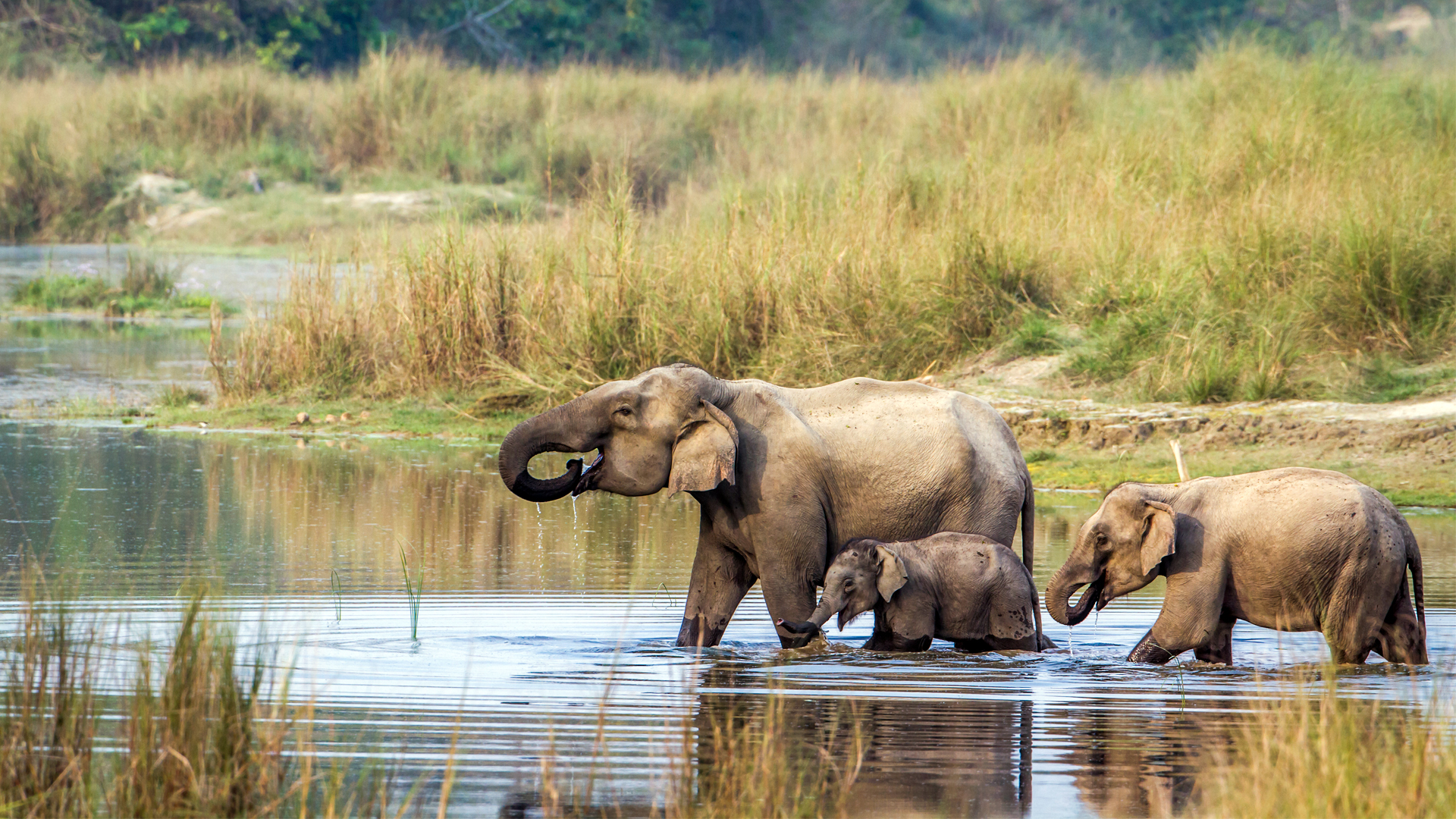
Spot one-horned rhinoceros in their natural habitat
The greater one-horned rhinoceros stands as Chitwan's most iconic resident, with over 600 of these magnificent creatures calling the park home. These prehistoric giants, weighing up to 2,200 kilograms, roam freely through the park's grasslands and riverine forests. The best viewing opportunities happen during early morning and late afternoon game drives when rhinos emerge from dense vegetation to graze in open meadows.
Your chances of spotting these armor-plated behemoths are excellent - Chitwan boasts one of the highest rhino densities in the world. Watch for their distinctive single horn and thick, grey skin that appears segmented like medieval armor. The park's conservation success story is remarkable, bringing these animals back from near extinction with only 100 individuals in the 1960s to today's thriving population.
Take thrilling elephant-back safaris through dense jungles
Elephant safaris offer an unmatched perspective of Chitwan's wilderness, allowing you to navigate through tall grasslands that would be impossible to traverse on foot. These gentle giants carry you silently through the park's diverse ecosystems, providing elevated views over the 20-foot-tall elephant grass where tigers and rhinos often hide.
The experience feels like stepping into a nature documentary as your elephant guide maneuvers through narrow forest paths and shallow streams. Professional mahouts (elephant handlers) share their deep knowledge of animal behavior and tracking techniques passed down through generations. Each safari covers different terrain - from dense sal forests to open floodplains - maximizing your wildlife encounters while supporting local conservation efforts through community-based tourism.
Observe over 500 bird species along pristine riverbanks
Chitwan's rivers and wetlands create perfect conditions for an incredible diversity of bird life. The Rapti and Narayani rivers serve as migration corridors for hundreds of species, making this park a paradise for bird enthusiasts. You'll spot everything from tiny kingfishers darting over water to massive Bengal florican performing elaborate courtship displays.
The park's bird checklist reads like an ornithologist's dream: endangered greater adjutant storks, colorful peacocks displaying their magnificent plumage, and rare grassland species like the swamp francolin. Dawn and dusk offer prime viewing times when birds are most active. Canoeing along quiet backwaters provides intimate encounters with water birds, while elevated watchtowers offer panoramic views of vast wetland areas where migratory flocks gather during winter months.
Experience traditional Tharu cultural performances
The indigenous Tharu people have lived harmoniously with Chitwan's wildlife for centuries, developing a rich cultural heritage deeply connected to the forest. Their traditional stick dances, performed around crackling fires, tell stories of jungle life and human-wildlife coexistence. These mesmerizing performances feature rhythmic drumbeats, colorful costumes, and acrobatic moves that have been passed down through generations.
Tharu villages surrounding the park offer authentic cultural experiences where you can learn about traditional fishing techniques, unique architectural styles using local materials, and sustainable farming practices. Women demonstrate intricate wall paintings made from natural pigments, while elders share folktales about forest spirits and wildlife encounters. These cultural exchanges provide a deeper understanding of how local communities have successfully coexisted with dangerous wildlife, creating a model for conservation worldwide.
Lumbini - Walk in Buddha's Birthplace and Find Inner Peace
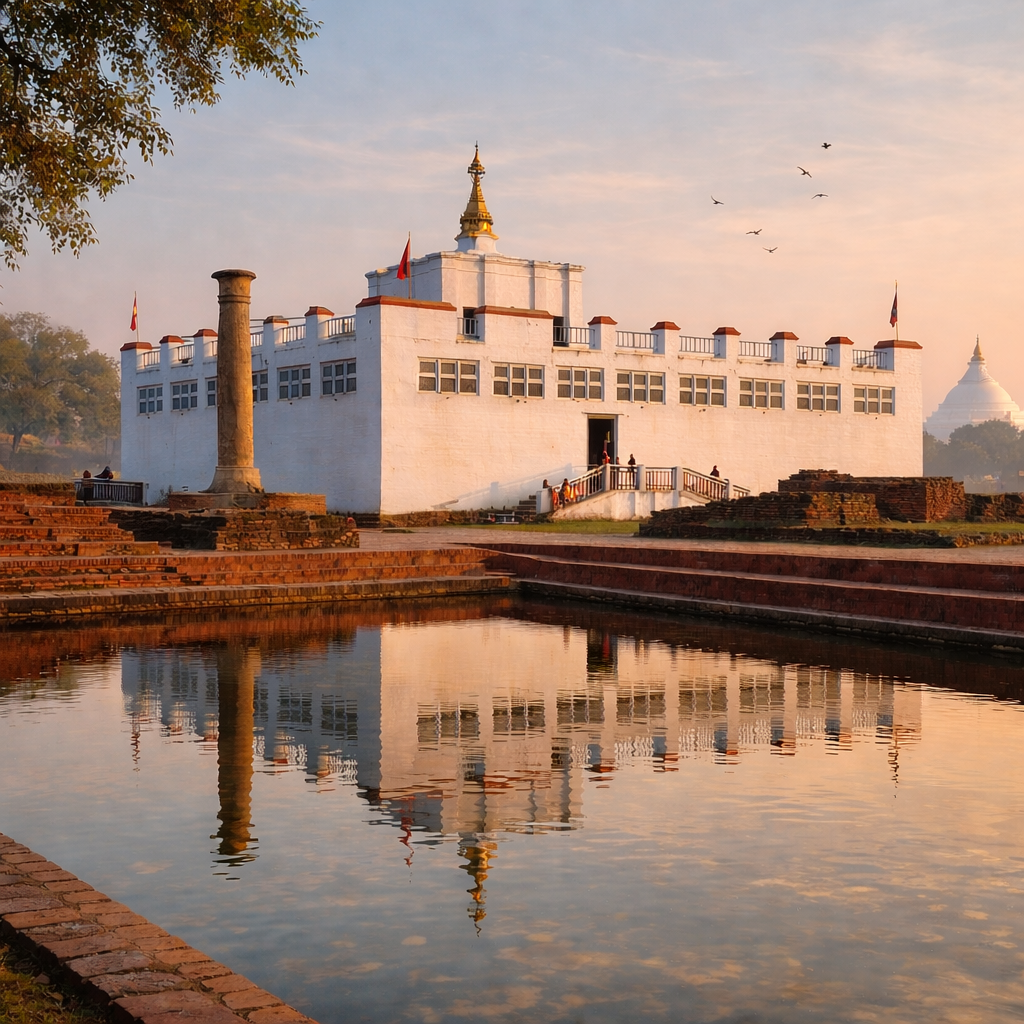
Visit the exact spot where Buddha was born 2,500 years ago
Standing in the sacred garden of Lumbini feels like touching history itself. This UNESCO World Heritage Site marks the exact location where Prince Siddhartha Gautama, who later became Buddha, was born in 563 BCE. The Marker Stone, a sandstone pillar erected by Emperor Ashoka in 249 BCE, pinpoints the precise birthplace and remains one of the most significant archaeological discoveries in Buddhist history.
The Maya Devi Temple houses the actual birth spot, marked by a stone relief depicting Buddha's mother, Queen Maya Devi, holding a sal tree branch while giving birth. Archaeological excavations have revealed layers of ancient structures dating back over 2,600 years, confirming the site's authenticity. Walking through these hallowed grounds, you'll see the sacred pool where Queen Maya Devi bathed before giving birth, surrounded by ancient brick foundations that tell the story of continuous worship spanning millennia.
Local guides share fascinating stories about the archaeological discoveries made here, including wooden structures that predate previously known Buddhist monuments. The reverent atmosphere is palpable as pilgrims from around the world come to pay their respects at this cradle of Buddhism.
Explore monasteries built by different Buddhist nations
The Lumbini Development Zone showcases an incredible collection of international monasteries, each representing different Buddhist traditions and architectural styles from around the world. Countries including Thailand, Myanmar, Sri Lanka, Japan, China, and Germany have built stunning temples that create a unique interfaith dialogue through architecture.
The Myanmar Golden Temple dazzles visitors with its traditional pagoda design and intricate golden details, while the Chinese monastery features classic red pillars and curved rooflines. Thailand's monastery presents elegant spires and colorful murals depicting Buddha's life stories. Each structure tells its own story about how Buddhism evolved and spread across different cultures.
Japan's Peace Pagoda stands as a gleaming white beacon promoting world peace, while Vietnam's monastery showcases contemporary Buddhist architecture with traditional elements. The German monastery, built by European Buddhists, demonstrates how ancient teachings have found new homes in Western culture. Walking between these diverse temples feels like taking a spiritual journey across continents without leaving Nepal.
Meditate in the peaceful Maya Devi Temple gardens
The gardens surrounding the Maya Devi Temple offer an oasis of tranquility perfect for meditation and reflection. Ancient bodhi trees provide natural shade, creating peaceful spots where visitors can sit quietly and absorb the spiritual energy that permeates this sacred space.
Early morning meditation sessions are particularly powerful, as the soft light filters through the leaves and the sound of chanting drifts from nearby temples. The carefully maintained pathways wind through lotus ponds and flowering plants, creating a natural mandala that encourages mindful walking. Many visitors find that simply sitting by the sacred pool brings a profound sense of peace and connection to Buddhist teachings.
The gardens also feature meditation pavilions where both beginners and experienced practitioners can find their center. Local meditation teachers often offer guidance to visitors interested in Buddhist mindfulness practices, sharing techniques that Buddha himself might have used in these very grounds.
Bhaktapur Durbar Square - Step Back in Time to Medieval Nepal
.jpg)
Admire the iconic 55-Window Palace architecture
The 55-Window Palace stands as Bhaktapur's crown jewel, showcasing intricate Malla-era craftsmanship that will leave you speechless. Built in the 15th century by King Bhupatindra Malla, this architectural masterpiece features fifty-five intricately carved wooden windows that create a stunning lattice pattern across the building's facade. Each window tells a story through its detailed woodwork, depicting mythological creatures, floral motifs, and geometric patterns that demonstrate the incredible skill of Newari artisans.
Walking through the palace courtyard, you'll notice the perfect harmony between wood, brick, and stone construction. The building's three-story structure showcases traditional pagoda-style architecture with sloping roofs and ornate doorways. The famous Golden Gate (Sun Dhoka) serves as the palace entrance, featuring gilded metalwork that catches sunlight throughout the day. Inside, the palace houses a national art gallery displaying ancient paintings, manuscripts, and artifacts that provide insight into Nepal's royal history.
Watch traditional pottery making in Potter's Square
Potter's Square (Sukuldhoka) offers an authentic glimpse into centuries-old pottery traditions that remain largely unchanged. Local artisans, primarily from the Prajapati caste, continue creating clay vessels using techniques passed down through generations. You can watch skilled potters shape clay on traditional wheels, their hands moving with practiced precision as they transform raw earth into beautiful bowls, water jugs, and decorative items.
The square comes alive during early morning hours when potters lay their freshly made wares out to dry in neat rows across the cobblestone plaza. This creates a mesmerizing pattern of terracotta-colored pottery against ancient brick architecture. Many workshops welcome visitors to try their hand at pottery making, offering hands-on experiences where you can learn basic techniques while supporting local craftspeople. The pottery here serves both practical and ceremonial purposes, with many pieces still used in traditional Hindu and Buddhist rituals throughout the Kathmandu Valley.
Climb the towering Nyatapola Temple for panoramic views
Nyatapola Temple dominates Bhaktapur's skyline as Nepal's tallest pagoda temple, rising five stories and thirty meters above Taumadhi Square. Built in 1702 during just five months under King Bhupatindra Malla's reign, this architectural wonder has survived numerous earthquakes, including the devastating 2015 quake that damaged many other structures. The temple's remarkable stability comes from its unique construction technique and perfectly balanced proportions.
Climbing the temple's steep stone steps, you'll encounter pairs of guardian statues on each level - starting with wrestlers at the base, then elephants, lions, griffins, and goddesses Baghini and Singhini near the top. Each pair represents increasing levels of strength and divine protection. From the temple's upper platforms, you'll enjoy breathtaking panoramic views of the entire Bhaktapur valley, surrounding hills, and on clear days, distant Himalayan peaks. The temple is dedicated to Siddhi Lakshmi, a tantric goddess, though the main shrine remains closed to non-Hindu visitors.
Taste authentic Newari cuisine in ancient courtyards
Bhaktapur's ancient courtyards provide the perfect setting for experiencing authentic Newari cuisine, which represents one of Nepal's most sophisticated culinary traditions. Traditional restaurants housed in centuries-old buildings offer an atmospheric dining experience where you can savor dishes that have remained largely unchanged for generations. The famous Juju Dhau (King Curd) tops every must-try list - this creamy, sweet yogurt is prepared using traditional methods and served in clay bowls that enhance its unique flavor.
Don't miss trying chatamari (Newari pizza), a thin rice crepe topped with minced meat, eggs, and vegetables, or yomari, a steamed dumpling filled with sesame seeds and jaggery. Bara, a lentil pancake, makes for an excellent appetizer, while samay baji presents a complete traditional platter featuring beaten rice, grilled meat, boiled eggs, pickles, and various side dishes. Many restaurants occupy restored traditional buildings with carved wooden pillars, brick courtyards, and rooftop terraces that provide stunning views of temple spires and ancient architecture while you dine.
Shop for handcrafted souvenirs from local artisans
Bhaktapur's narrow streets and traditional squares offer incredible shopping opportunities for authentic handcrafted items made by skilled local artisans. The city remains a living museum where traditional crafts continue thriving, making it an ideal place to purchase genuine souvenirs with cultural significance. Woodcarving shops display intricate masks, decorative panels, and religious statues carved from local timber, with many pieces requiring weeks or months to complete.
Metalworkers create beautiful singing bowls, traditional oil lamps, and ornate jewelry using techniques unchanged for centuries. Thangka painting workshops offer religious scrolls painted on canvas or silk, depicting Buddhist and Hindu deities with incredible detail and vibrant colors. Local textile artisans produce handwoven scarves, shawls, and traditional clothing using looms passed down through generations. Many shops operate as workshop-galleries where you can watch artisans at work while browsing their creations, ensuring your purchases directly support traditional craftspeople and help preserve these invaluable cultural traditions.
Conclusion
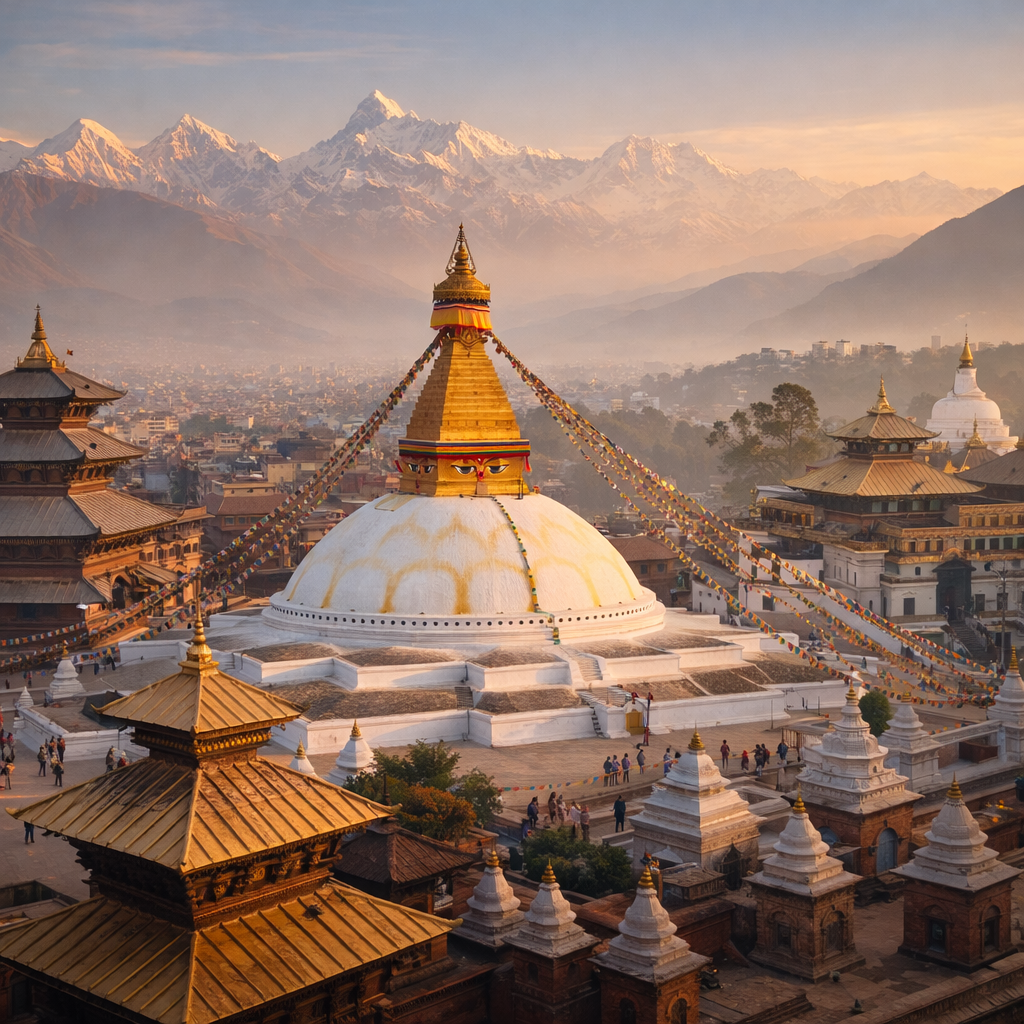
Nepal's five UNESCO World Heritage Sites offer an incredible journey through history, nature, and spirituality that will leave you amazed. From exploring ancient royal palaces at Kathmandu and Bhaktapur Durbar Squares to trekking toward Mount Everest in Sagarmatha National Park, each destination tells a unique story. Chitwan National Park brings you face-to-face with rhinos and tigers, while Lumbini connects you to the peaceful birthplace of Buddha.
These sites aren't just tourist attractions – they're living pieces of Nepal's soul that have shaped the country's identity for centuries. Pack your bags and start planning your Nepal adventure because experiencing these world treasures firsthand will give you memories and insights that photos and stories simply can't capture. Each site offers something different, so you can create the perfect mix of culture, adventure, and spiritual discovery that matches what you're looking for.